

There are excellent musicians, and then there are the prodigious and multifarious ones who leave successive generations of artistes, scholars and listeners with something to ponder for decades after they have passed. In the world of Hindustani music, nobody embodies this more completely than Kumar Gandharva.
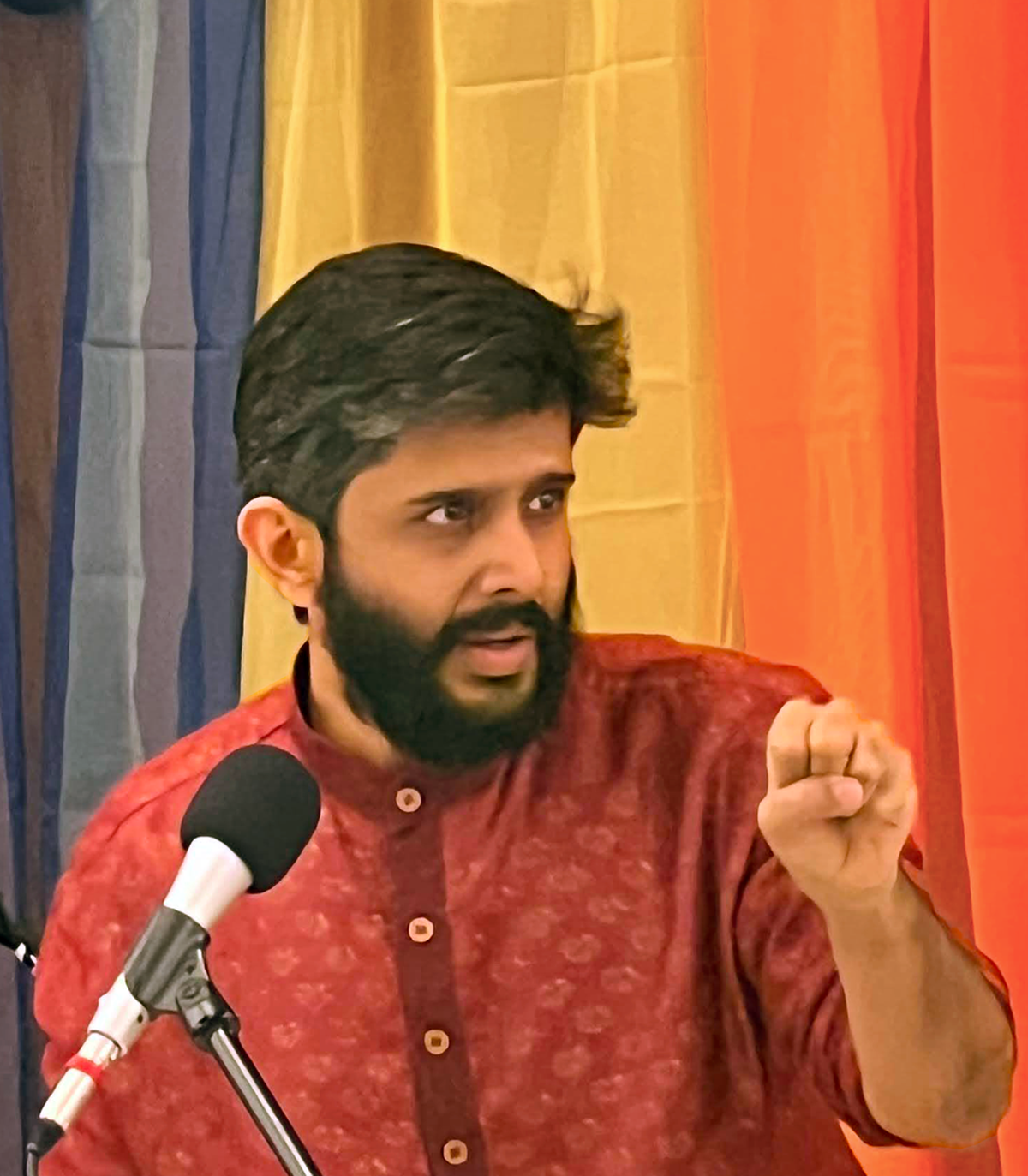
Scholar, archivist, Hindustani musician and teacher, Srijan Deshpande, recently presented an unusual yet interesting conversation-cum-concert — The Stories and Songs of Kumar Gandharva. Through music and anecdotes, Srijan shared key moments from the legendary musician’s journey as a composer.
To use one of Kumar ji’s favourite words, a-svabhavik, the evening had a seamless flow and was held in the intimate setting of the library at the Bangalore International Centre.
Spanning 15 years, from Kumar Gandharva’s return to singing in 1952 after recovering from tuberculosis to the publication of his first anthology of original compositions, Anuprag Vilas, in 1965, the evening offered glimpses into an important phase of his life.
Srijan presented an impeccable portrait of Kumarji, who saw no divide between the mundane and the artistic. For instance, he was charmed by the musically resonant names of villages and small towns near Dewas, such as Amona and Binjana. These nuanced observations informed his creative process as a composer. During the five years when he was unable to sing while recuperating from tuberculosis, he immersed himself in the folk music of the Malwa region and the sweetness of the Malwi dialect. He listened to songs sung by villagers as they went about their daily chores, songs about the seasons and the rhythms of the agricultural cycle. They led to a new set of musical ideas. What set Kumarji apart as a musician was his ability to experience music devoid of any notion of hierarchy.
Srijan made for a compelling raconteur, combining insight, scholarship, empathy and humour, taking the audience through the many transformations and new directions that Kumar Gandharva explored. During his prolonged illness, he was nursed by his first wife, Bhanumati, who would break into tears at his condition. A bandish he composed during this difficult phase bears the imprint of despair and introspection. It was a Patmanjari, an ingenious weave of five conjoined raags.
Sajal naina kaahe?
gori kaaran bataade ri!
naa hum dekh sakat toraa shok, naa shobhe dragjal tohe,
gori kaaran bataade ri!
(why do your eyes fill up with tears?, fair one, tell me why! I cannot bear to see your grief, tears do not beseem you, fair one, tell me why!)
Srijan compared the composition to a weave, as raags such as Maru Bihag, Nand, Bhinna Shadja, Kedar and Shankara meet, intersect and overlap to “give rise to something new, something whole, something that is as much a simple dhun as it is a brilliant conjoining of five heavyweight raags.”

Srijan Deshpande took the audience through the many transformations and new directions that Kumar Gandharva explored.
| Photo Credit:
Special Arrangement
When Kumar Gandharva returned to Mumbai in 1952, his fresh and distinctive gayaki filled many with wonder. Srijan points out that the Marathi humourist and writer P.L. Deshpande likened him to a mahapurush who had emerged to breathe new life into the stagnant waters of Hindustani music, adding, that the eminent actor Dr. Shreeram Lagoo refused to listen to anyone else.
For the past several years, Srijan has been working on a book on Kumar Gandharva, due to be published next year. Srijan is a disciple of his father, a well-known Hindustani musician and musicologist Satyasheel Deshpande, who was a disciple of Kumar Gandharva.
It was a deeply resonant journey through history, geography and biography, moving from Pune and the Deodhar School of Music in Mumbai to the quiet hills of Dewas. Along the way, it was enriched by insightful exchanges among musicians and scholars, including Kumar Gandharva’s guru B.R. Deodhar, as well as Wamanrao Deshpande and Vasantrao Deshpande
Published – August 25, 2026 06:36 pm IST