

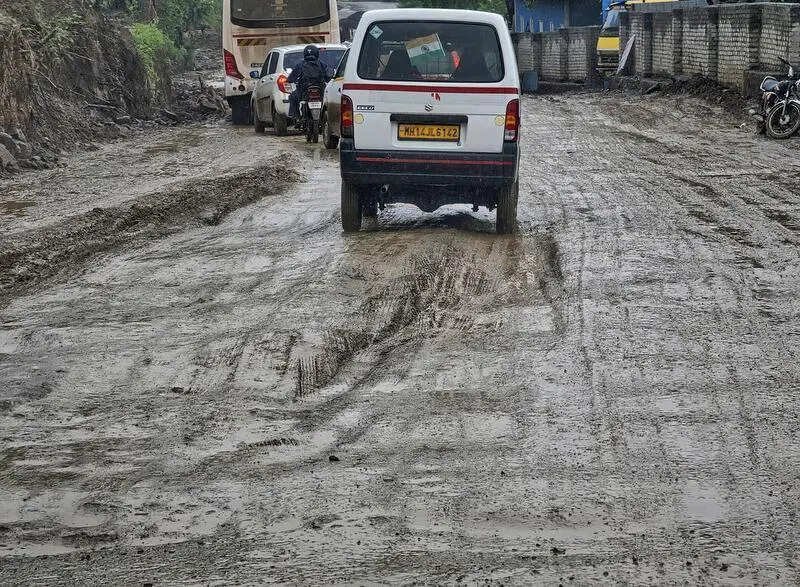
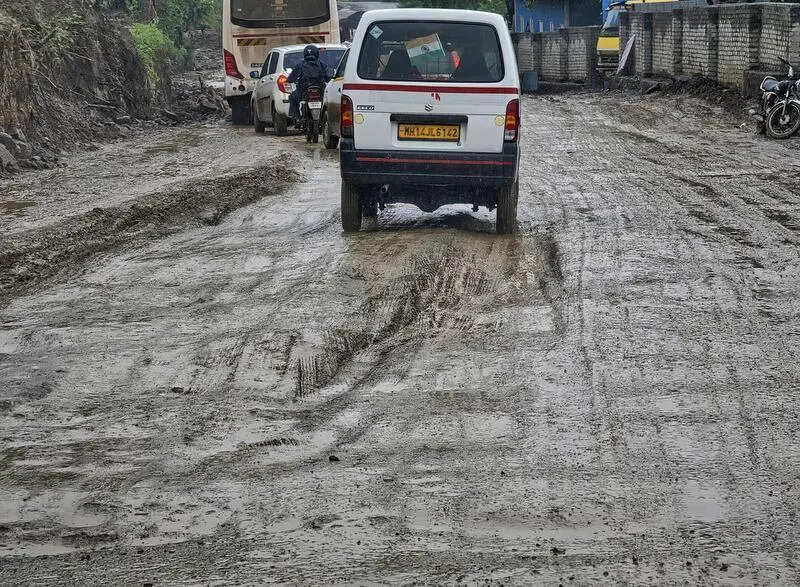
For thousands of patients, students, schoolchildren and office-goers travelling daily through Sus Gaon, the road to Symbiosis University & Hospital has become a test of endurance. Potholes, waterlogging, poor lighting, inadequate public transport and traffic chaos at the Sus Gaon junction routinely turn the short journey towards Lavale and Hinjewadi Phase 3 into a commute lasting nearly an hour. The crisis is particularly alarming for Symbiosis Hospital, which sees 1,200 to 1,500 outpatients a day.Stakeholders said little has changed despite repeated meetings with authorities. Poor public transport forces many to depend on Ola and Uber, but drivers often refuse trips because of the road conditions.The stretch from Sunny’s World to Lupin Limited becomes treacherous during monsoons, said Vidya Yeravdekar, chancellor of Symbiosis International. She added that Symbiosis had also reached out to Pune Metropolitan Region Development Authority (PMRDA) and offered to complete the road.“The work should have finished before monsoon. Our engineering and MBA students had done a study identifying the causes of the problem and shared it with authorities. As there are no traffic wardens on the stretch, we had posted our security guards, but nobody listens to private guards. A couple of students have fallen on this stretch,” she said.PATIENTS AT RISK“The worst is seeing ambulances stuck in traffic. It makes you wonder whether a patient could have been saved if the ambulance had reached on time,” said Yeravdekar, noting that Symbiosis Hospital has a 900-bed hospital that caters to 1,200-1,500 OPD patients a day. “No poor patient should suffer because of a bad road. But ambulances get caught in the gridlock here many times.”She added that Symbiosis had installed streetlights on the stretch in 2022, but they were removed when road work started about six to eight months ago. “It is pitch black at night and is scary to navigate a road full of potholes. We are ready to help, but there has to be some ownership and coordination between govt departments,” she said. “The local MLA, corporators and other politicians should take up this matter. Why else are they there as public representatives?”DCP traffic (Pimpri Chinchwad) Vikrant Deshmukh said the biggest issue in the area was incomplete road work. “The carriageway is narrow and needs to be widened to accommodate the large volume of traffic. We have written to PMC seeking more traffic wardens in the area.”ORIGIN OF CHAOSBut the problem doesn’t start at Sunny’s World chowk, it starts further ahead, at Sus Gaon, said some residents.“Four schools and several colleges send buses through this route, with school traffic starting around 8am and other traffic picking up by 9am. The congestion starts building from 8am but traffic wardens arrive only around 9am to clear jams. The road lacks proper footpaths, dividers and barricading, while garbage, sewage, potholes and waterlogging add to the problems,” said Shrenik Gandhi, a frustrated resident.“Thousands of IT employees travelling towards Hinjewadi Phase 3 also use this already inadequate road. We have repeatedly approached traffic police and PMC officials, but there has been little improvement,” he added.A TOLL ON HEALTHThe Symbiosis Centre for Emotional Wellbeing’s study on 139 students and staff members who used the road every day showed there was a psychological toll. As many as 90% of the respondents blamed poor road conditions and traffic for their mental distress. More than 90% experienced anxiety during their journey, while 84.6% reported feeling unsafe to the point of believing they were “risking their life” every day. Over 72% of the commuters said they had either witnessed or experienced an accident on this road, leading to frustration, irritation, and a loss of motivation for over 50% respondents.The commute was draining physically too, with 83.6% of respondents reporting a negative impact on their overall health. Their symptoms included physical exhaustion (85% of respondents) and significant body pain (70%). The burdens translated into significant behavioural shifts – about 80% of commuters were late to their destinations, productivity was diminished, and many reported increased impatience, a loss of temper and a tendency to avoid social interactions after their commutes.BETTER PUBLIC TRANSPORTSandeep Raman, an IT professional, stressed on the need for better public transport. “Most of the unorganised sector that lives in the Pashan-Sus area prefers Symbiosis Hospital for affordable and free treatment. Workers in the institutes inside and near Symbiosis campus use buses to travel,” he said. “Since office and school timings are almost the same, the 7.55am bus from Deccan that goes via Pashan is jam packed. These buses are 25-30 minutes apart, which means if you miss a bus, you may not reach on time.”He raised a ticket with Pune Mahanagar Parivahan Mahamandal Ltd (PMPML) two weeks ago, requesting that bus services be adjusted to match the peak-hour demand.“I got a reply that cited lack of resources. It said that once buses and staff become available, PMPML will run extra vehicles during peak hours. However, my point is this – Till they get the funds, if PMPML increases the frequency to one bus per 10 minutes or so during the peak morning and evening hours, and reduces the frequency to one bus per 45 minutes during other times, it can solve the problem,” Raman said.PMPML chairman and managing director Mahesh Awhad said the utility will consider the idea. “I have instructed the chief transport manager (operations) to get a report and examine the load factor on this route. If required, then we can reschedule some buses to cover this time period.”Official SpeakTraffic is a major issue. The contractor can’t close the road even at night as it is the only stretch connecting Lavale. The road is narrow, leaving the contractor little room to work amid traffic. The contractor has installed signages and protective barriers wherever necessary. We are monitoring the work, but due to practical issues, progress is slow. We have asked institutions in the area to consider staggered timings so that traffic can be spread throughout the day and ease congestion — Shivprasad Bagadi | PMRDA Chief Engineer (in-charge) For Road_______________The road, earlier under PWD, is 5m wide. There should have been proper planning when institutions began coming up in the area to assess if the road could handle traffic. We are now widening the road to 10m, with an additional 1m on either side for utilities. As the road is on a hill slope, rainwater flows onto it, forcing us to drain water before any work. At night, students drive at high speeds, posing a safety risk to workers — A PMRDA official involved with the road work__________________ONE CORRIDOR, MULTIPLE CRISES & THOUSANDS AT RISKWho uses the road regularly? Vidya Valley (1,000+ students), Dhruv Global (2,000+), Symbiosis College (1,000+), ISBM (1,000+), and over 20 pre-primary schools in Sus. Students also travel to DAV Aundh, Vibgyor Baner, JSPM, MIT, DPS, Pawar Public and others People going to Hinjewadi phase 3 People in Sus depend on Symbiosis Hospital, Jupiter and Lopmudra; there is only one road for all patientsSuggestions Deploy traffic police at Sus Gaon and Shell petrol pump from 8am; congestion typically lasts till 11–11.30am Use single-lane barricading throughout the road, allow only left-side movement in the peak hours, and divert VTP-bound cars via Atul Western Hills Road Ban heavy vehicles during morning and evening peak hours PMC should prioritise pothole repairs Garbage dumping and waterlogging near Sus Chowk need action, with strict enforcement against violators Schools/institutions could provide manpower for traffic management An alternative IT-park route should be identified to reduce the impact on local commutersLupin–Sunny’s World–Symbiosis Road The road serves Symbiosis University Hospital (SUHRC), Symbiosis Lavale campus and institutes including SIT, SIHS, SMCW, SCON, SIBM, SSSS and SIMC, Dhruv School, Shri Chaitanya College, ISBM College, Lupin Ltd and local businesses and residential communities Due to the poor road conditions, people have to endure longer travel time. There is higher accident risk, two-wheeler instability and pedestrian conflicts5 civil engineering students and 5 operations students were involvedSafety Audit by Symbiosis Students-The road safety audit was conducted in the first week of Aug by students from the Civil Engineering department of SIT Pune and SIBM’s Operations specialisation, under the guidance of Sayali Sandbhor, head of the civil engineering departmentImpact on Education-Hindered attendance and academic disruptionImpact on Healthcare-Delayed emergency access and difficulty for ambulances to ply throughIssues identified Open trenches without barricading Inadequate lighting at nightSuggested immediate fixes Fill potholes and clear shoulder debris Provide temporary drainage andproper road camber Complete rigid pavement work Install road markings and pedestrian crossings Provide proper barricading and night reflectors Restore usable carriageway width by removing construction material, pipes, parked vehicles and other obstructions Install edge protection/railings near dangerous drops and excavationsOther Suggestions Appropriate signage and warnings in accordance with IRC guidelines The immediate priority should be to secure these hazardous stretches while the construction continues Measures to stagger traffic and office timings so that the existing road capacity is not overwhelmed On Aug 7, a delegation from Symbiosis met Abhijeet Chaudhari, IAS, metropolitan commissioner, Pune Metropolitan Region Development Authority (PMRDA), and presented their issues to himProposed traffic-management measures Operate the stretch as a controlled work-zone corridor during peak hours Use alternating one-way traffic during 8-9.45am and 3.30-5.30pm Hold vehicles at marked zones outside the narrow stretch to prevent head-on traffic Meter campus exits — buses first, followed by cars in batches and two-wheelers separately Create temporary pedestrian walkways and marked crossings in the area Deploy one corridor controller and 16 radio-connected marshals Collect daily data on queues, travel time and incidents, and adjust traffic cycles accordingly Consider staggering opening and closing timings of educational institutions