

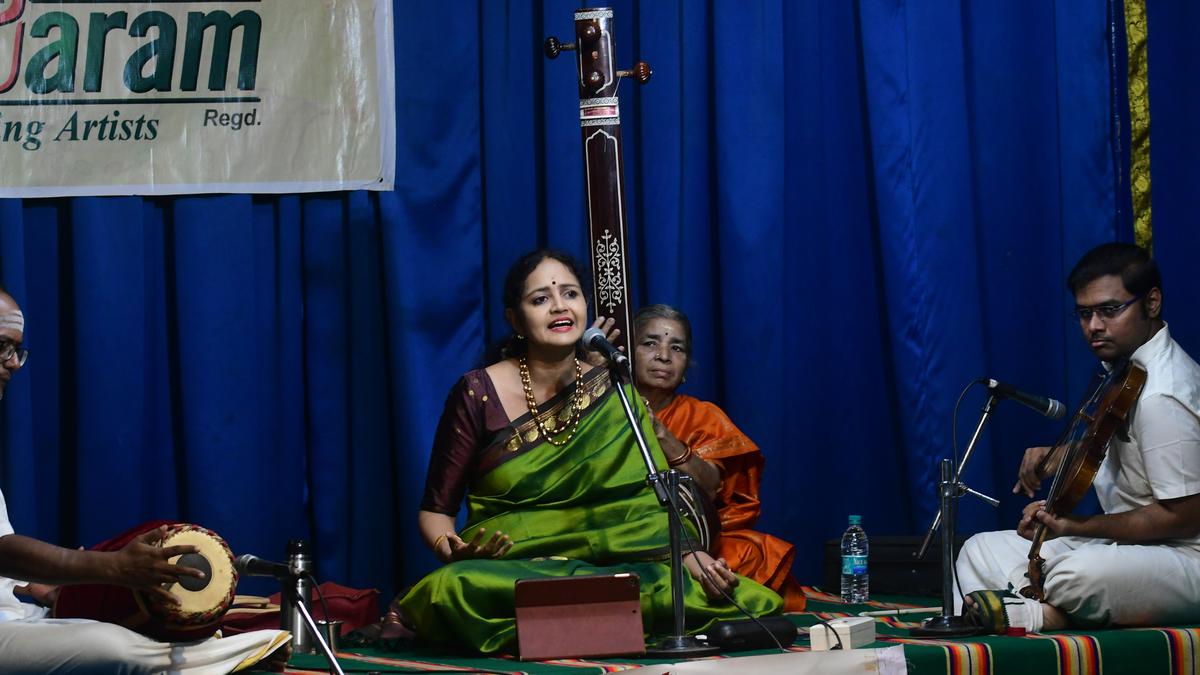
Bhavna Iyer’s concert as part of Kedaram’s 8th anniversary held in July 2023.
| Photo Credit: SRINATH M
Bhavna Iyer’s concert, as part of Kedaram’s eighth anniversary music festival, had an aesthetic flair. Her Bhairavi raga alapana stood out for its passages. Blessed with a pliable voice, Bhavna was able to traverse all three octaves with effortless ease. She rendered Muthuswami Dikshitar’s masterpiece ‘Balagopala palayasumam’ in chowka kalapramana with elan. The niraval and swaras were at the charanam line ‘Maanikya makuta haara valaya dhara’. Violinist M. Vijay lent able support during the alapana, niraval and swaras segments. Mridangist B. Ganapathiraman’s tani, featuring several sparkling passages in tisra nadai, was engaging.
Bhavna’s rendition bore the stamp of Semmangudi bani. She has imbibed the style from her gurus — her initial training was under V. Subramaniam, one of Semmangudi Srinivasa Iyer’s foremost disciples, and now continues her learning under Trivandrum G. Seethalakshmi, another distinguished disciple of the maestro.
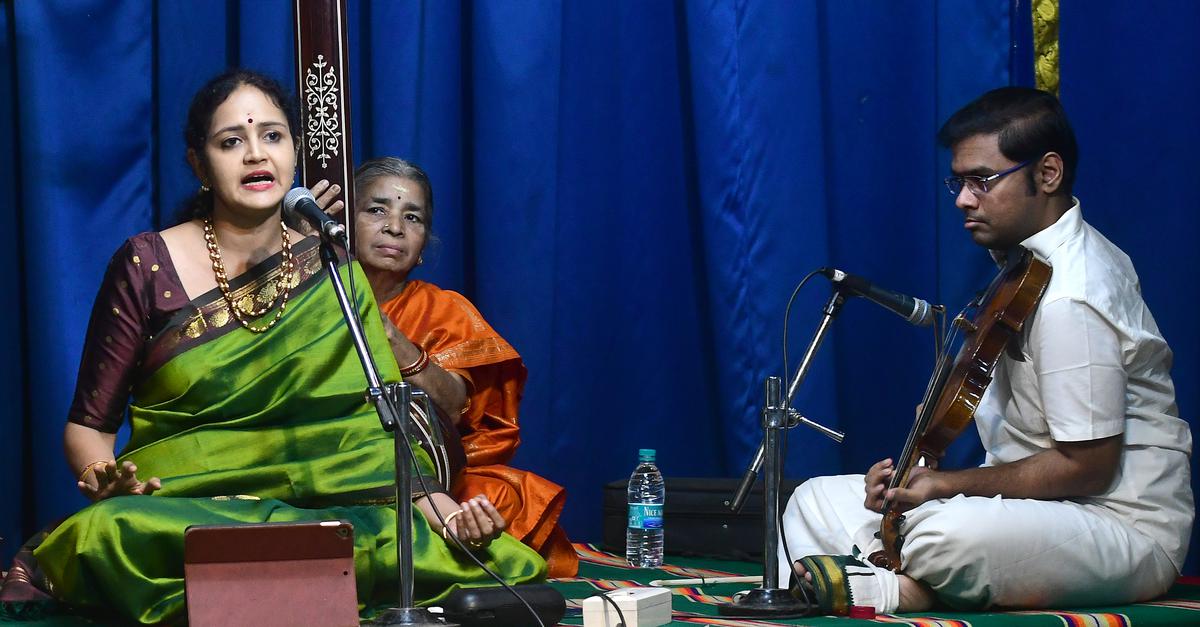
Bhavna Iyer at Kedaram’s 8th anniversary in July 2023.
| Photo Credit:
SRINATH M
Bhavna took up raga Varali for exhaustive treatment. She chose Syama Sastri’s ‘Bangaru kamakshi’ (Misra Chapu). The alapana had delicate phrasings, and Bhavna’s rendition, with chittaswara and swara-sahitya segments, stood out for its subtle nuances. Niraval and swaras were at the anupallavi line ‘Thamadhamele rave’.
Earlier, Bhavna began her concert with Kothavasal Venkatarama Iyer’s popular Saveri varnam, ‘Sarasuda’. This was followed by Tyagaraja’s ‘Mummoorthulu gumigudi’ (Atana) with kalpanaswaras at the pallavi. Another Tyagaraja kriti that she rendered was ‘Ni bhakti bhagya sudha’ (Rupakam), with swaras at the pallavi again. In this kriti, the composer focuses on the purpose of life – to swim in the ocean of nectar, of devotion, of the Lord.
Bhavna’s delineation of raga Vasantha was appealing, and Vijay matched it up with his equally graceful and engaging exposition. The chosen kriti was ‘Sri kamakshi katakshi’. The Tamil composition is attributed to Tiruvarur Ramaswamy Pillai, though some musicians ascribe it to Subbaraya Sastri. The chittaswara passages, swarasahitya segments and a sprinkling of swarakshara prayogas enhanced the appeal of the composition. Patnam Subramania Iyer’s ‘Iti nyayama’ in raga Malavi was rendered next.
The recital concluded on a serene and devotional note with the Narayaneeyam shloka ‘Yogeendranam’ rendered in a ragamalika encompassing Behag, Kapi, Sindhubhairavi and Tilang; followed by Swati Tirunal’s ‘Krishna chandra radha mohana’ in Tilang and a mangalam, ‘Bhujanga sayino nama mangalam’, in Yadukula Kamboji, again by Swati Tirunal.
Published – August 03, 2023 05:20 pm IST