


In March 2026, at the Oscars, songwriter EJAE accepted the award for Best Original Song as part of the songwriting team behind ‘Golden’, the hit song from the film KPop Demon Hunters and the first K-pop song to win the award. Speaking to the room, she recalled how people had once mocked her for pursuing the genre. That night, nobody in the room doubted K-pop’s global appeal or its place on the biggest stage.
But four and a half months later, all seven members of BTS posted on Instagram that they would not submit an entry to the Grammys this year. This came despite their album ARIRANG topping the Billboard 200, the Circle Album Chart, Oricon, and the British and German album charts, while its lead single, ‘SWIM’, had given them a seventh No. 1 on the Billboard Hot 100. BTS declined to submit anyway, saying they hoped music could be heard and loved without being divided by region or language.
What changed between March and July was the introduction of a new category. On June 16, the Recording Academy, which presents the Grammys and is separate from the Academy that presents the Oscars, announced the Best Asian Pop Music Performance category for the 2027 Grammys, stipulating that qualifying recordings must make meaningful use of an Asian language; entirely English-language recordings are not eligible. ‘SWIM’, sung mostly in English, would therefore not have qualified for the category that some had speculated was created with BTS in mind.
The band, one of the most globally influential acts, was unwilling to accept the new categorisation and announced that it would not submit its music for Grammy consideration. Recording Academy CEO Harvey Mason Jr., expressing his disappointment over their decision, defended the new category in a statement. “The Asian Pop category was created to celebrate the depth, diversity and extraordinary growth of pop artistry coming out of Asia. More categories mean more artists’ work is recognised. It’s never to divide, but to expand who is recognised by our 15,000 Grammy voters,” he said.
“I also want to be very clear: submitting music in a genre category such as Asian Pop or Jazz does not exclude an artist from also submitting and being considered in the General Field categories,” he added.

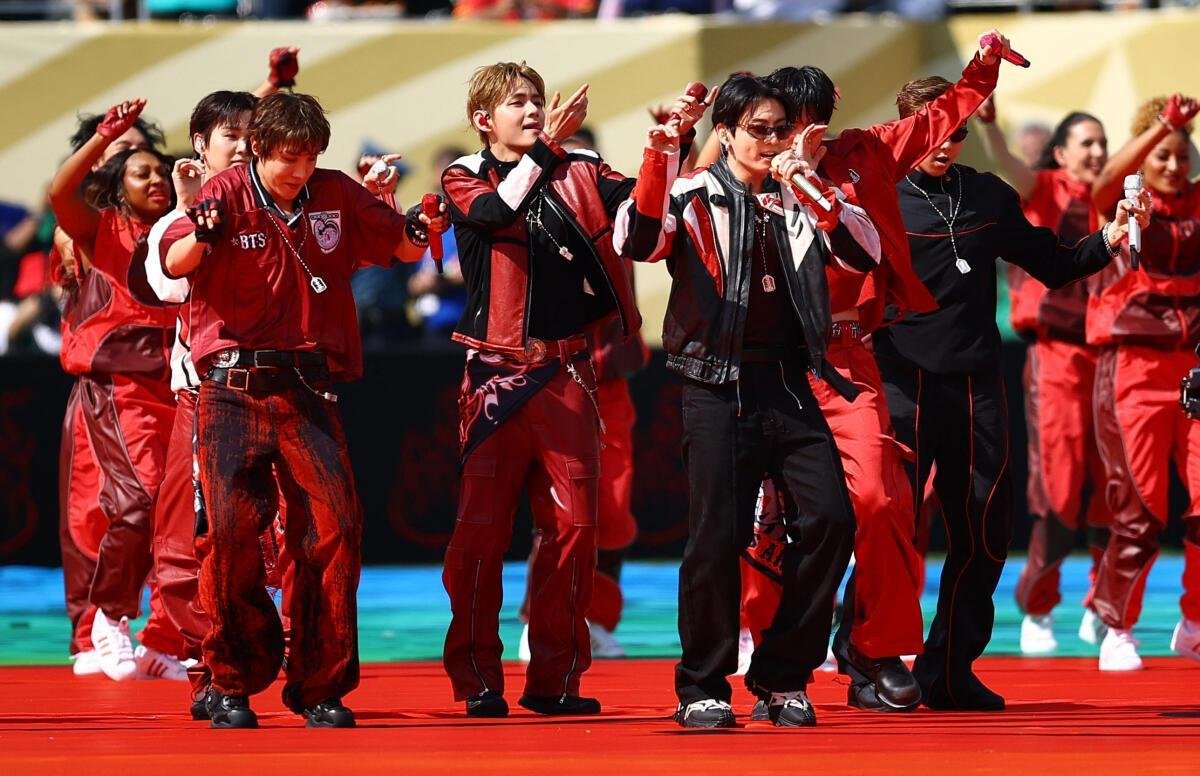
BTS stole the spotlight at FIFA World Cup final halftime show
| Photo Credit:
Special Arrangement
BTS’ position has brought a decade-long conversation to the fore — one that has been heard sometimes aloud and often quietly, as artistes have spoken of feeling overlooked and restricted. It also raises a larger question: if music transcends language and culture, why does one of the world’s biggest music institutions feel compelled to create categories so closely tied to geography?
This is not an argument against every category of its kind. The Latin field has run since 1975 and built careers the general field would never have. Best African Music Performance, introduced in 2024, gave Tyla a Grammy she was not otherwise going to win. But artistes have, over the years, expressed concerns that categories such as Urban, R&B, Rap and Country have kept them outside the mainstream pop and limited their opportunities for wider recognition. Now, even a BTS win could be met with a dismissive, “What’s the big deal? It’s only in the Asian category.”
The new label has its own challenges. The Latin category, for instance, has a relatively clear linguistic base, with Spanish and Portuguese sharing Latin roots. Asian pop, on the other hand, spans a huge geographical expanse, encompassing vastly different cultures, musical traditions and languages. The question, then, is what exactly makes up an Asian pop sound?
The Recording Academy has stood here before, and it knows it. In 2020, it renamed Best World Music Album as Best Global Music Album, acknowledging that the term ‘world music’ carried connotations of colonialism, folk and non-American music. Artistes had also described the category as a box that was difficult to climb out of. Six years after acknowledging the problem, the Recording Academy has built another one.
Whoever wins in February 2027 will deserve it. BTS have not refused a trophy; they have only questioned the premise behind the category. EJAE was made fun of for liking K-pop, but this move seems to reinforce the same idea — that music from a specific part of the world should come with that tag. Grammy should know Asia is a continent, not a genre.
Published – August 10, 2026 06:47 pm IST