








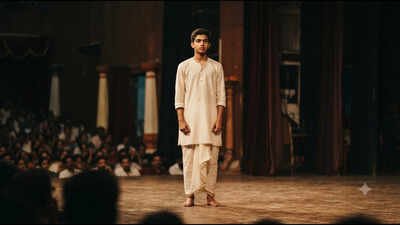
Most performers walk onto a Kathakali stage hoping to disappear. Sayid walked onto the one at the Ernakulam School Kalolsavam hoping to be seen. He danced without the traditional makeup and costume, knowing the judges would probably disqualify him. What he wanted to say was about money.
The rule everyone knows
Kathakali treats costume as part of the language. According to India’s national culture portal, the chutti, headgear and face colours work as a visual code that tells the audience a character’s status and temperament. The same portal says the look transforms the performer so completely that the character becomes the true presence on stage. Judges mark this look as mandatory. Dancing without it breaks a deeply rooted rule, which is why the outcome was so predictable.
What the look actually costs
Becoming a character takes time and money. One costume study notes that makeup takes nearly three to four hours to complete. It also puts costume rental at roughly Rs 3,000 to 3,500 per day, though that figure dates back to 2014 and prices have likely moved. Add a makeup artist and training fees, and the bill grows fast. For a student without strong family backing, the stage can feel closed before the first step.
A protest with a price
Protesting by performing is a different thing from protesting by speaking. Sayid gave up the chance of a grade, the one thing a young artist is expected to chase at a festival. A speech might have been politely applauded and forgotten. A disqualified performance asks the room to sit with an uncomfortable question about who gets to compete.
Tradition versus access
Fair-minded people can disagree here. Defenders of the rules argue that without a fixed standard, Kathakali stops being Kathakali. Critics answer that a standard nobody can afford shuts out talent. The art itself has changed before. The same costume study says some artisans now use cheaper, non-traditional materials, which can speed up the loss of old skills but also helps the art reach more people. Perhaps the real question is whether a school festival can protect tradition and still make room for students who cannot pay for it.
What stays with you
Martin Luther King Jr. wrote in his Letter from Birmingham Jail that injustice anywhere is a threat to justice everywhere. A student in a plain costume is a small version of that idea. Whatever the judges decided, the performance made people talk about something they usually avoid.Disclaimer: This article is based on limited, unverified details of the event and on general background about Kathakali. Figures such as costume rental rates are dated estimates.