


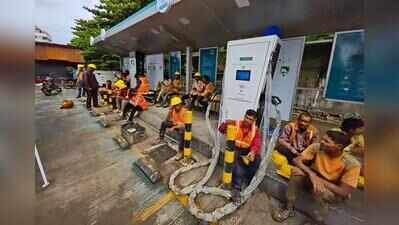
Pune: Electric vehicle adoption is experiencing an unprecedented surge in the city, with the Pune regional transport office recording a triple-digit increase in registrations compared to 2025.Official data shows that, between Jan and July, the Pune RTO registered 5,887 electric four-wheelers — a jump of 230% over the 1,782 registered during the corresponding period last year. At the same time, 21,551 EV two-wheelers were registered, recording a 134% increase over the 9,231 bikes registered in Jan-July 2025. TOI was unable to access registration data from Pimpri Chinchwad Municipal Corporation.“We have not seen such a spike before,” an RTO official said.RTO data indicates that roughly 20 vehicles are scrapped each month — under the Maharashtra EV policy, buyers who submit a certificate of deposit for a scrapped vehicle are eligible for a 4-6% discount on the EV’s ex-showroom price, a manufacturer discount (up to 5%) and significant tax breaks. This is in addition to the standard benefits offered to EV buyers.Another official said potential savings on fuel costs have made EVs an attractive proposition, despite a higher upfront investment. “People save significantly on fuel over the years. Even if batteries begin degrading after seven or eight years, many two-wheeler owners recover the additional cost through lower running expenses,” the official said.The ongoing conflict in West Asia has put a severe dent in global oil and gas supplies, contributing to a surge in fuel prices around the world. During Monday’s trading, futures of the West Texas Intermediate crude hovered around the $85/barrel mark and Brent around $92 a barrel.Rajeev YSR, CEO of EV charging infrastructure company ThunderPlus, said there was a global shift towards EVs. “In the US, the Iran conflict has pushed fuel prices up 30%. EV electricity is heavily subsidised in India, so the running cost per kilometre is a fraction of petrol’s, and that difference flows straight back into household income,” he said.In Pune, petrol currently sells at Rs 111.52 per litre, while diesel and compressed natural gas (CNG) are priced at Rs 98.15/litre and Rs 95.75/kg, respectively.The increasing adoption is not confined to personal vehicles — 259 electric buses were registered this year, compared to just the one last year; electric autorickshaw registrations have increased from 207 to 235, and electric goods carriers from 144 to 352.According to dealers, improving vehicle quality is also a major factor. One EV dealer said: “There are better EVs now with improved battery technology; the GST on EVs is maintained at 5%. Several who had planned to buy combustion engine two-wheelers have opted for EVs.”Sachin Mahajan, president of the state chapter of Federation of Automobile Dealers Associations (FADA), earlier said he expected registration of EVs, particularly two-wheelers, to increase as they weren’t as dependent on an extensive charging network like cars.“Better EV models, improved quality, and expanding public charging infrastructure have nullified old hesitations. The way forward is clear — double down on manufacturing quality and charging networks, and EVs will lead sooner than anyone expects,” Rajeev added.