

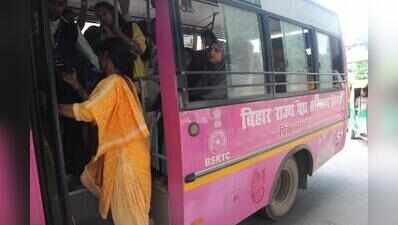
Patna: At least 27% of women in Bihar forgo opportunities because of gaps in transport availability, affordability and safety, nearly twice the proportion of men at 14%. The impact assessment also found that women make 37% fewer trips than men and spend Rs 18,800 more a year on commuting, highlighting the continuing gender gap in mobility.Safety concerns, long waiting times and inadequate public transport continue to restrict women’s access to education, employment and other opportunities. These findings are from the “Impact Assessment Study of Pink Bus in Patna, Muzaffarpur and Gaya”, titled ‘From Accessibility to Livelihoods: Understanding the Impact of Gender-Responsive Mobility’. The study was conducted by a private agency in collaboration with the Bihar State Road Transport Corporation (BSRTC) and the State Transport Department.The Pink Bus initiative has provided some financial relief to women who previously depended on autos and e-rickshaws. The assessment found that women switching to pink buses reported a 28%-35% reduction in daily travel costs, while 60% of surveyed commuters said their travel expenses had fallen. However, many women continue to rely on other modes because of gaps in the pink bus network. Homemakers, self-employed women and daily-wage workers remain among the lowest user groups.Irregular service is one of the biggest setbacks. Around 39% of women identified irregular timings as a major barrier, while 21% cited limited route coverage. Only 22% said pink bus timings fully matched their requirements. Nearly 48% did not know the bus schedules, with some depending on WhatsApp groups or waiting at bus stops to spot a bus. In Patna, although 50% of women commute daily, only 17% regularly use pink buses.The problem is reflected in the experience of a salaried passenger in Patna, who said she sometimes could not find a pink bus in the morning when she needed to reach the station. On some days, she did not see any buses, while on others, five or six buses arrived together. Such unpredictability makes it difficult for students and working women to depend on the service for fixed-time journeys.The initiative also faces challenges on the workforce side. Many women conductors face long commutes, relocation and difficulties balancing transport work with household responsibilities. Two-thirds of conductors reported long distances between their homes and workplaces. Women in Muzaffarpur and Gaya also reported mixed family support, including resistance from husbands and in-laws.Working conditions add to the pressure. The report describes working days that can stretch to 12-13 hours, while women continue to manage household and caregiving duties. Some conductors have brought their children on bus trips because they lack childcare support. Access to clean washrooms, drinking water and resting areas at depots and route endpoints is also inconsistent.BSRTC administrator Atul Kumar Verma said the corporation is monitoring the service on a day-to-day basis and working to address issues related to route management and delays. “Our route management teams track the routes and timings, and wherever there are delays or issues in route management, we are taking steps to rectify them. We are continuously working to improve the services,” he said.At present, Patna has 25 pink buses, according to BSRTC administrator. Verma said the fleet is being expanded, with five pink electric buses already added, while the state plans to increase the number of pink buses in the state capital to 50 as part of the expansion of its electric bus fleet.