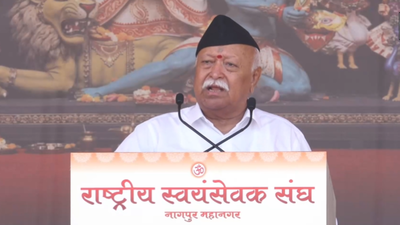









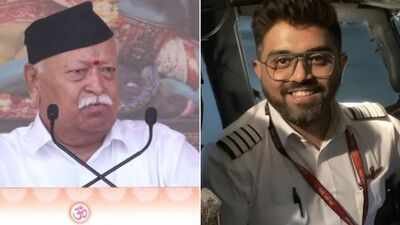
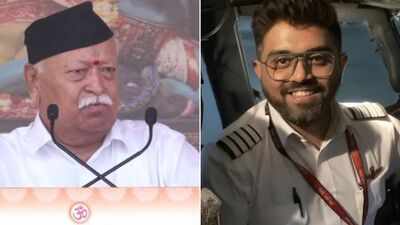
NEW DELHI: RSS chief Mohan Bhagwat on Tuesday linked Captain Smit Machchhar’s courage in preventing a possible plane disaster to Hindu values and traditions, saying these values inspire people to protect human lives and ensure the safety of others.Addressing the Rashtriya Swayamsevak Sangh’s annual Vijayadashami celebrations at its headquarters in Nagpur, Bhagwat said Machchhar’s actions reflected values passed down through generations.“Since the Hindu society’s worldview and nature are inclusive, we must understand that such efforts will only strengthen the emotional unity, goodwill, and good conduct among all of us. It is this very nature and these values, passed down from generation to generation, that inspires Captain Smith Machchar to put his own life in danger and devote himself to protect human lives,” Bhagwat said.Machchhar became widely praised after he fought off his co-pilot, who attacked him aboard a Flydubai flight travelling from Dubai to Tel Aviv with 174 people on board. Despite sustaining stab wounds, the captain managed to resist the attack, allowing passengers and crew members to intervene and restrain the co-pilot.Bhagwat said the RSS was working to awaken the Hindu spirit and build a well-organised and strong society.“RSS is working to awaken the Hindu spirit and build the entire society into a well-organized and strong society…It is these values that inspired Captain Smit Machchhar to do what he did…”He also said the actions of individuals guided by these values could strengthen national unity and promote harmony across communities.“Driven by this very ethos, what Captain Smit Machchhar did recently was natural. There was no training on what to do in such a situation; her innate tradition and values simply surfaced during that moment of testing. This is the Hindu nature. Consequently, it naturally nurtures and protects the dignity and security of all diversity. This work serves as a constructive force for national unity and global harmony. And this is not something we merely talk about.
Share your thoughts in the comments
Be respectful · TOI community guidelines
People do not join the Sangh to listen to speeches; they come first and cultivate the practice of this ethos through their actions…”The RSS chief also spoke about national unity, describing the bond among Indians as unconditional and rooted in a sense of belonging and affection.“The Unity of us Bharatiyas – Intrinsic and Unconditional The bond we share with one another and our relationship with Bharat are living bonds, rooted in the heart and therefore unconditional. They are one-sided in nature, as expressed in the words: ‘May your glory remain eternal, O Mother; whether we live for a few more days or not’,” Bhagwat said.He added that the freedom fighters had demonstrated complete devotion to the nation during the struggle against British rule.“Our freedom fighters demonstrated this very spirit of complete and unconditional devotion to the nation. It was this devotion that ultimately compelled the British government to leave Bharat,” Bhagwat said.