









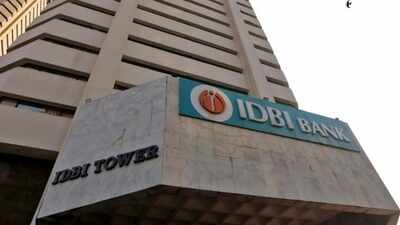
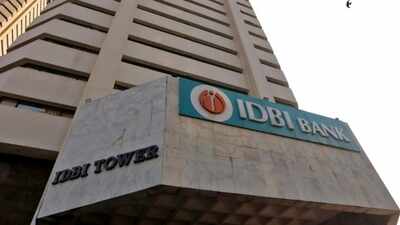
Canada-based Fairfax Financial Holdings is set to acquire a 60.72 per cent stake in IDBI Bank for approximately Rs 53,000 crore ($5.5 billion). The transaction would rank as the largest foreign investment in an Indian bank. It marks a big step forward in India’s long-pending efforts to privatise state-owned banking assets.The Cabinet Committee on Economic Affairs has approved M/s 10955230 Canada Inc, a subsidiary of Fairfax, as the strategic buyer for the combined stakes held by the government and Life Insurance Corporation of India (LIC). The government will sell its 30.48 per cent holding for around Rs 26,620 crore, while LIC will divest its 30.24 per cent stake for approximately Rs 26,440 crore.The Cabinet Committee on Economic Affairs’ approval brings to a close a process that has stretched over nine years. Valuation disagreements had repeatedly complicated the sale. In February 2026, initial bids from Fairfax and Emirates NBD came in below the government’s undisclosed reserve price, forcing a pause in the process. The bidding exercise was subsequently revived, and the revised offers were placed before the cabinet committee for consideration.Fairfax, led by Canadian billionaire Prem Watsa, will pay Rs 81 per share. This is above the benchmark fair value of Rs 75.99 arrived at by two independent valuation agencies, according to an official statement.
Biggest foreign investment in an Indian bank
The proposed sale is the biggest transaction in the banking sector and a major development in the prolonged effort to privatise IDBI Bank and reduce government ownership of commercial enterprises.The transaction is expected to be completed before the end of FY27. Once the deal goes through, the government will withdraw its representatives from IDBI Bank’s board.Emirates NBD’s acquisition of a 60 per cent stake in RBL Bank was valued at $3 billion. The Fairfax-IDBI Bank transaction would also exceed MUFG Bank’s purchase of a 20 per cent stake in Shriram Finance for Rs 39,618 crore. That deal was described as the largest cross-border investment in India’s financial-services sector, but the IDBI Bank transaction is larger by around Rs 13,000 crore.The proposed acquisition is also significantly bigger than Sumitomo Mitsui’s $2 billion deal for Fullerton India Credit and PayU’s $4.7 billion acquisition of BillDesk, which was the largest financial-services transaction of its period.The disinvestment process was initiated in 2022 but suffered a setback earlier this year when the initial bids received were lower than the government’s reserve price.Following the announcement on Wednesday, IDBI Bank shares rose 9.07% to close at Rs 90.44 apiece on the BSE.Finance Minister Nirmala Sitharaman described the deal as a “milestone”, saying “having supported the bank’s recovery, we are now enabling its next phase of growth through the infusion of Foreign Direct Investment while retaining a minority stake”.“This will not only strengthen the banking ecosystem but also help banking services surpass global benchmarks. It reinforces that India’s growth story is strong, its economy is resilient, and the government’s commitment to reform is unwavering,” she added.
Regulatory approvals needed
The transaction cannot be completed until it receives the necessary regulatory clearances. These include approval from the Reserve Bank of India (RBI), which will carry out a “fit and proper” assessment, as well as clearances from the Competition Commission of India (CCI) and other statutory authorities.Before the sale can be finalised, Fairfax will have to establish its credentials with the RBI and submit a roadmap outlining how it intends to meet the regulator’s requirements.The company will also be required to make an open offer to public shareholders, unless the Securities and Exchange Board of India (Sebi) grants a waiver.Under RBI regulations, promoters are permitted to hold a maximum stake of 26 per cent in a bank.Fairfax will have up to 15 years to meet this requirement, Department of Investment and Public Asset Management (DIPAM) Secretary Arunish Chawla said. The promoter will also be subject to a five-year lock-in period, he added.Fairfax already owns a 40 per cent stake in Kerala-based CSB Bank. Following the IDBI Bank acquisition, it will have to either merge the two lenders or exit its investment in CSB Bank, which is based in South India.Chawla said the incoming promoter would be required to preserve IDBI Bank’s existing name, brand and customer relationships for a minimum of three years.Addressing concerns among employees, he said they had no reason to worry. The transfer of management, he added, had been discussed with all stakeholders.LIC, meanwhile, will be required to reduce its holding in IDBI Bank from 19 per cent to 15 per cent within two years.The IDBI Bank deal could mark a turning point for India’s banking industry by establishing a potential model for privatising other state-owned lenders, where government ownership continues to be predominant.It will also offer a test of whether investors are willing to take control of a large Indian bank while navigating stringent regulatory conditions and the challenges involved in running a financial institution.The government, however, has described the proposed divestment as a “strategic restructuring”. It has maintained that the Centre and LIC will together retain a 34 per cent stake in the bank.The sale would come after the Tata Group’s takeover of Air India, completed in January 2022. Tata had won the bid for the national carrier in October 2021 with an offer of Rs 18,000 crore, comprising Rs 2,700 crore in cash and the assumption of Rs 15,300 crore in debt.