










We often feel stuck in life. There are times when we feel that nothing we do is leading to our desired goals. As if someone is pulling us down. Being sad and depressed, we look out for signs. Signs that will tell us what we need to do and what must be done. In that moment, we look up with eyes full of hope and desperation.In that moment of desperation, our guardian angels actually give us signs. Has it ever happened that you start seeing repeated numbers everywhere? On your watch, on the number plate of the car moving forward, or on a billboard. If yes, then you are one of those who have been chosen by the universe. Every night is followed by a dawn; to take a long jump, you must move a few steps back. Similarly, it’s the universe’s way of preparing you for the journey coming forward.As we talk about angel numbers, one such number is 333. Numerology expert Jane Alton explains: “3 energy is associated with the birth of the idea and lots of light. You may feel as though anything is possible.” It is a number associated with growth, intuition, and expansion. Among cultures, the number 3 has always been considered holy. The concept of the Holy Trinity or the Tridevas in Hinduism—the number 3 has always carried a part of divinity within it.
What does 333 actually mean?
Seeing 333 is actually a nod from the universe saying, “Hey, you are on the right track. Keep going!”This number can also be a sign that your thoughts, feelings, and actions are in harmony—and that positive change is within reach. The 333 angel number meaning, therefore, combines your expansion with forward movement. Now, it may appear that your life is stagnant or you feel stuck in self-doubt. Believers interpret it as encouragement to use your unique talents, speak honestly, and trust that personal growth is already underway.Some numerologists reduce multi-digit numbers by adding their digits together. In this case, 3 + 3 + 3 equals 9. The number 9 is commonly associated with completion, wisdom, generosity, and socially conscious action. That synthesis presents 333 as both a freedom-seeking, fun-loving number and a reminder to direct creative energy toward a larger purpose.This does not mean taking life less seriously, but rather making a commitment to courage—send out that resume, complete that song, start the conversation you have been keeping at bay.
What does 333 mean for your career?

Image credit- Canva AI
As previously stated, 333 stands as an open invitation from the universe to trust your intuition and start doing the work. It will not happen that the universe will lay a job offer at your feet, but it’s a way of telling you that it’s time for you to think about moving forward.Some experts say that the number becomes visible when a person is looking for a job change, feeling stuck in their career path, hesitant to take a creative path, or simply does not know what to do.Success will not come without considerable action; it will not come automatically, but the universe is saying that the gates are now open.Ask yourself these questions:·Am I doing what I want?·Am I giving my best?·Would a better conversation remove my obstacle?·Am I growing at the place I am at?333 wants you to trust your gut. But do not make a rushed decision; sit down, take a breath, and think about it. Instead of wanting to jump, take a step at a time.
What does 333 mean for relationships?
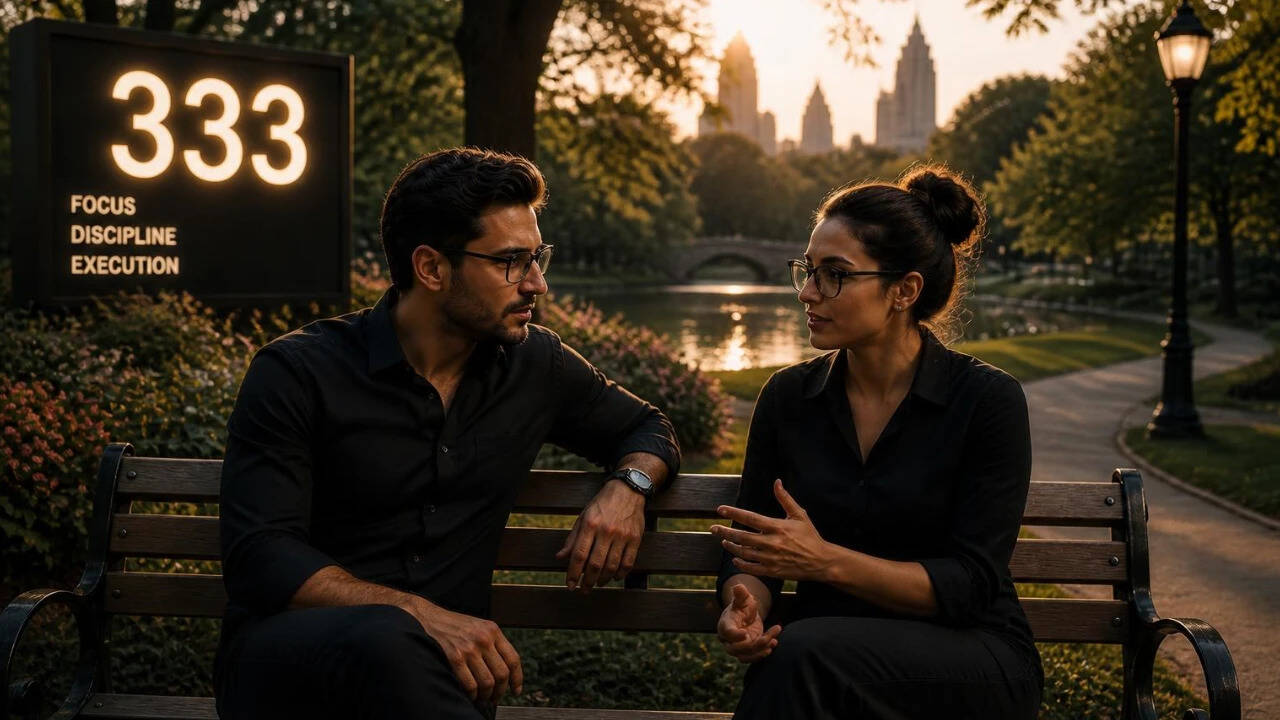
Image- Canva AI
Many numerologists interpret 333 as a lucky number for honesty and deeper communication. You might want to be in a place where things feel lighter and joyful; that’s where most people flow. If you are in a relationship, 333 encourages honest communication; express your thoughts and feelings to the other person. It might be hard, but it’s important. If conflicts arise, it’s a sign to be mature and resolve them with mutual understanding.It does not mean you have to let go of yourself, as you can only give out what you have within yourself. Giving out love requires you to love yourself, embrace yourself, and accept yourself as you are.
What should you do then?
The spiritual meaning of seeing 333 is to expand your consciousness and align it with the universe’s will. Trust your conscience; deepen your intuition through meditation, prayer, and gratitude. Most importantly, stay aligned with your soul’s purpose. If there’s any doubt, sit with yourself and ask yourself what exactly you want, because the answer is always inside.