








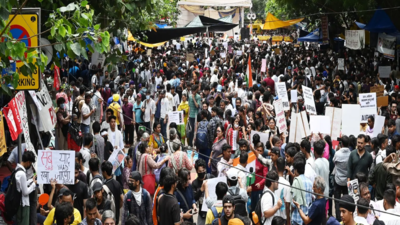
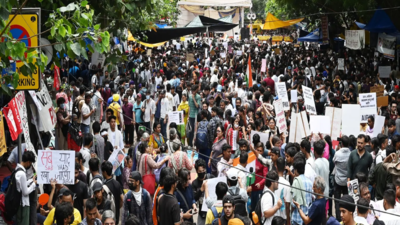
NEW DELHI: Cockroach Janta Party (CJP) founder Abhijeet Dipke on Monday criticised the decision to remove Jantar Mantar as a designated protest venue, accusing the government of targeting the right to dissent.“They have removed Jantar Mantar as a designated protest site. Yes, it’s no longer a protest site as anyway it was turned into a war zone by the coward dictator. Ab poora desh Jantar Mantar banega!” Dipke wrote on X.In a separate post, Dipke said the decision reflected a broader threat to democratic freedoms. “Today, Modi denotified Jantar Mantar as a designated protest site. Tomorrow, he will denotify democracy itself,” he wrote, adding that “the dictator’s problem was never the protest site. It was the very idea of people protesting”.CJP leaders Saurav Das and Ashutosh Ranka also criticised Delhi Police’s decision with Das calling it an assault on the right to peaceful assembly and Ranka questioning the alternatives offered.“Why is Narendra Modi scared of Jantar Mantar? The Jantar Mantar belongs to THE PEOPLE OF INDIA,” Das wrote on X, questioning whether the ministry of home affairs had consulted citizens, organisations or other stakeholders before taking the decision.Calling the move arbitrary, Das said it threatened the fundamental right to protest. “Just how they are denotifying people’s Jantar Mantar, the Prime Minister will soon denotify democracy in India,” he wrote, adding, “Ab poora desh Jantar Mantar ban raha he!”Ranka took a swipe at the new arrangements, asking: “Why not declare Mt Everest as the designated protest site?”Delhi police on Monday de-notified Jantar Mantar as a designated venue for demonstrations and named Ramlila Ground, Burari Ground and CBD Ground in east Delhi as alternative sites. The police said the decision followed recommendations from a committee constituted by the Ministry of Home Affairs to examine alternative venues for protests.In a notice issued by Delhi Police Commissioner Anurag Kumar, the police said the Ministry of Home Affairs had constituted a committee to examine suitable alternative venues where citizens could exercise their right to organise protests. The decision to remove Jantar Mantar from the list was taken on the committee’s recommendations.
Share your thoughts in the comments
Be respectful · TOI community guidelines
Delhi Police said a revised standard operating procedure governing protests at the three newly designated venues would be issued separately. The order partially modifies an earlier standing order dated April 28, 2022.The decision comes amid heightened tensions following protests against Chief Election Commissioner Gyanesh Kumar over alleged irregularities in the Special Intensive Revision of electoral rolls.